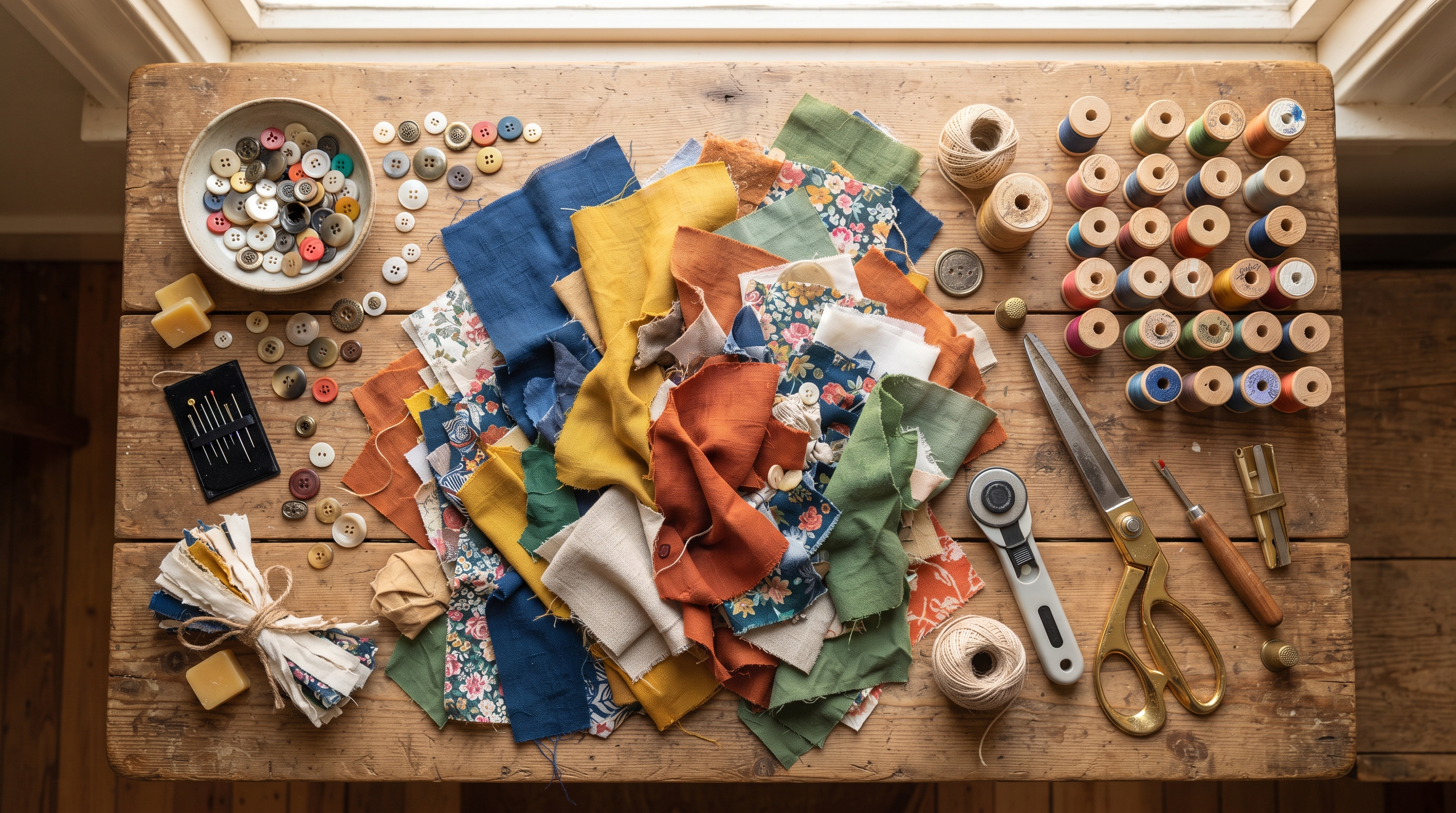
There's a number every fashion brand would rather not look at too closely: in every closet — or every warehouse — a piece will turn into textile waste before it turns into revenue again. Unsold stock, cutting scraps, last season's collection. Until recently, the only way out was donating it, burning it, or letting it pile up in a warehouse.
Fashion is already flagged as one of the industries generating the most textile waste worldwide — estimates point to tens of millions of tonnes discarded every year, much of it in landfill. Upcycling, turning an existing piece into something new instead of discarding it, has always been a possible answer. The problem is doing it well, piece by piece, used to take time and technical judgment few small brands have to spare.
The real bottleneck of upcycling: deciding what to do with each piece
Before cutting any fabric, someone has to answer a tedious question: what can this piece actually become? A torn pair of jeans might become a bag, but only if the fabric can hold the stitching. A polyester dress follows a different path. Doing that sorting manually, piece by piece, is why so many well-intentioned brands never scale upcycling beyond one capsule collection a year.
Where AI comes in: sorting and visualizing before cutting a single thread
This is exactly where AI changes the game. AI tools can analyze a photo of a discarded fabric and help categorize it by composition and usability — separating what can become a new garment from what's only fit for fiber recycling. More than that: before any physical cutting, you can generate a visualization of the new piece — jeans becoming a skirt, a scrap becoming a bag — and decide if it's worth producing for real.
That shifts the upcycling logic from “let's try it and see what happens” to “we've already seen how it looks, now let's produce what we know will sell”.
Signs your brand should already be doing AI-assisted upcycling
- You have leftover stock from past collections and no clear plan for it.
- Your brand already talks about sustainability, but upcycling still only happens "when there's time".
- You've thrown away good fabric because you had no clear idea what to turn it into.
- A competitor already launched an upcycling capsule and sold out fast.
- You want to test an upcycling piece before committing to physical production.
Upcycling isn't about guilt for having overproduced. It's about turning what already exists into new desire — and that also needs to be fast enough to work as a business.
What AI doesn't do — and why that matters
It's worth being honest here: no AI tool physically cuts, sews or reassembles a garment. The people who actually do upcycling are still the atelier, the seamstress, the professional executing the transformation by hand. AI's role is different: cutting decision time, showing the result before producing, and making it viable to do this at small scale — without needing a design department dedicated to testing possibilities.
How this works in practice, step by step
The flow is simple: you photograph the leftover piece or fabric, AI suggests reuse categories based on the composition it identifies, you visualize two or three possibilities for the new piece, and only then decide which one is worth taking to the atelier. What used to take days of brainstorming becomes a decision that takes a few minutes — and the piece only gets cut for real once there's confidence it will sell.
The environmental upside, one piece at a time
Every garment that gets a second life is one less unit of virgin fabric that needs to be produced, dyed and shipped. It's a small gain, multiplied across a lot of small brands — exactly the audience upcycling was always meant to serve.
Who this really matters for
Small circular-fashion brands, thrift stores relaunching pieces, customization ateliers — that's who gains the most from AI-assisted upcycling. Not because it replaces manual work, but because it lowers the barrier to deciding what to do with what already exists, without months of trial and error.