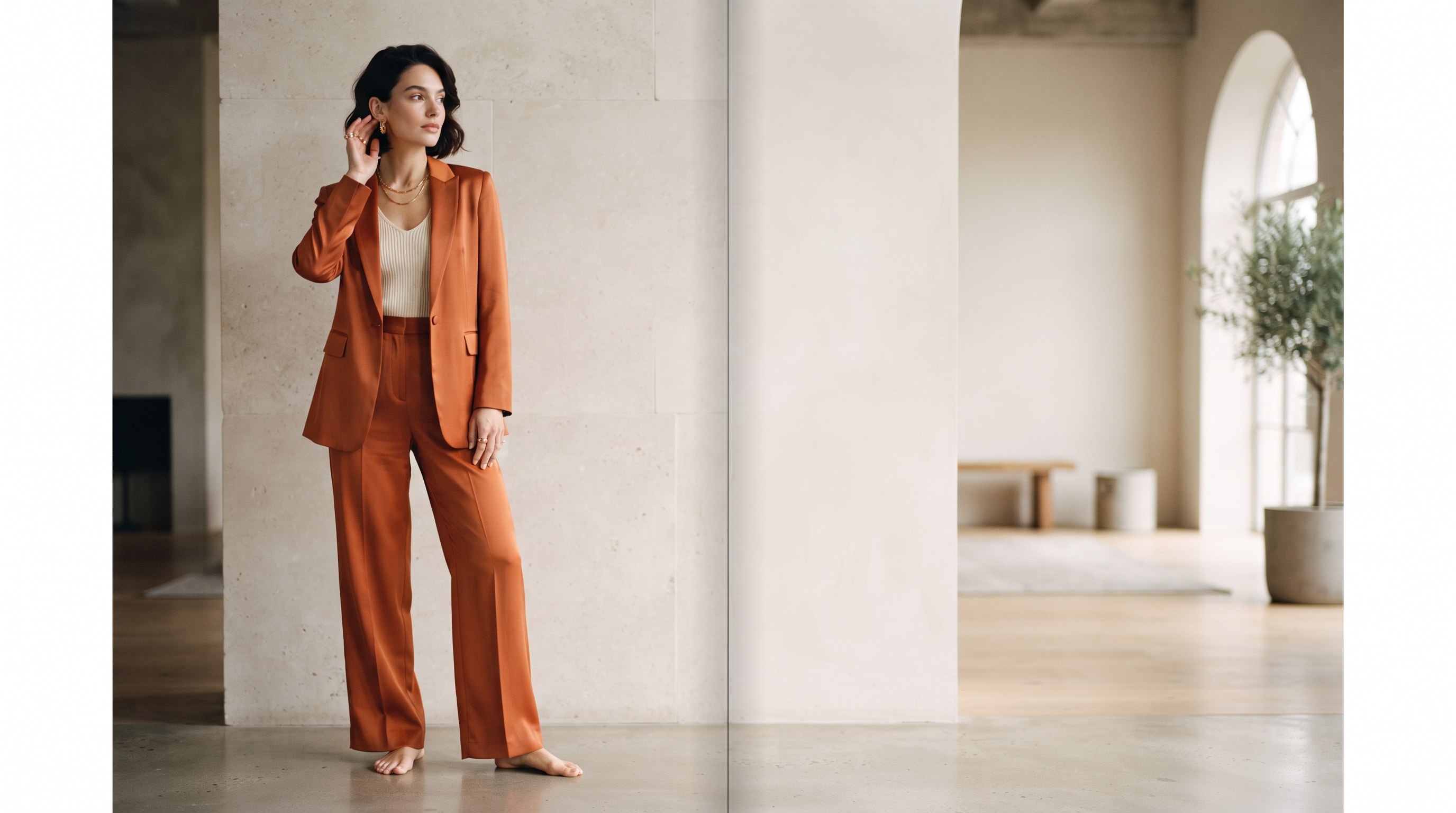
You shot the entire collection, edited the images, picked the best ones — and yet, once you put it all into one catalog, it looks like a folder of loose files. Every image has a different background, different light, different framing. That's not a lookbook. That's a photo dump.
Meanwhile, your competitor publishes a catalog with a cover, consistent typography, a sequence that tells a story. It looks like a fashion magazine. The difference isn't the camera, the model, or the quality of any single photo. It's a step almost nobody teaches you: editorial layout.
This matters more than it seems. A customer who gets a beautiful catalog assumes, without even noticing, that the clothes are good too. A customer who gets a folder of mismatched photos gets suspicious — even if the piece is identical to the competitor's.
What actually separates a plain catalog from an editorial lookbook
A good product photo is only step one. What turns loose photos into a lookbook is composition: a consistent grid across pages, typography that speaks the brand's language, a sequence that builds rhythm and reinforces the collection's mood. None of that comes from the camera — it comes from decisions made after the shutter clicks.
Until recently, that meant hiring a designer after the shoot — one more cost on top of the $80–$240 per image a traditional photoshoot already runs, and one more step delaying the launch, often adding another week or two before anything could go live.
Signs your catalog is still just a folder of photos
- Every image has a different background, light and crop from the next.
- You've tried laying it out in Canva, but it never looks like a big brand.
- Your competitor publishes a lookbook with a cover and sections — you post loose photos to the feed.
- A customer asked “send me the catalog” and you didn't have a PDF to send.
- You paid a freelancer just to lay it out, and it still took weeks to finish.
A beautiful catalog isn't vanity. It's what decides whether a customer scrolls past or stops to look at your whole collection.
How AI builds the editorial layout for you
The Editorial Lookbook tool takes the photos you already have — including AI-generated ones — and automatically builds pages with a professional grid, typography and mood. It's not a filter. It's the same layout principles a fashion magazine uses, without hiring anyone to do it.
You pick the palette, sequence and tone — the tool organizes everything into export-ready pages. The result comes out in minutes, not weeks.
And it's not a one-time job. Every new collection repeats the same visual pattern automatically — your brand stays recognizable season after season, without reinventing the layout from scratch every time you launch a piece.
What the numbers say about faster visual production
The same logic that already cuts visual production costs by up to 90% for brands using generative AI applies to post-production too: building an editorial layout stopped being a weeks-long project with its own budget line and became part of creating the image itself. What used to be a separate layout contract now fits into the same workflow that already generates the photo.
How it works in practice, from upload to a ready PDF
- You upload the collection's photos — even simple product shots, no professional shoot required.
- You pick the collection's mood: minimalist, editorial, colorful or seasonal, plus the palette that matches your brand.
- The tool organizes everything into pages with a consistent grid and typography, in the order you set.
- You review, tweak whatever you want, and export a PDF or image ready for any channel.
Where to use your lookbook once it's ready
A well-built catalog becomes a press kit, material for a multi-brand store, an Instagram carousel, a PDF to send to a sales rep, a one-pager for a wholesale buyer. Same content, reused across every channel where your brand needs to look professional, without redoing the work for each one.
You stop delaying your collection launch waiting for layout to be ready, and start launching with a catalog that matches the product you already make well, without depending on anyone else's schedule to get there.