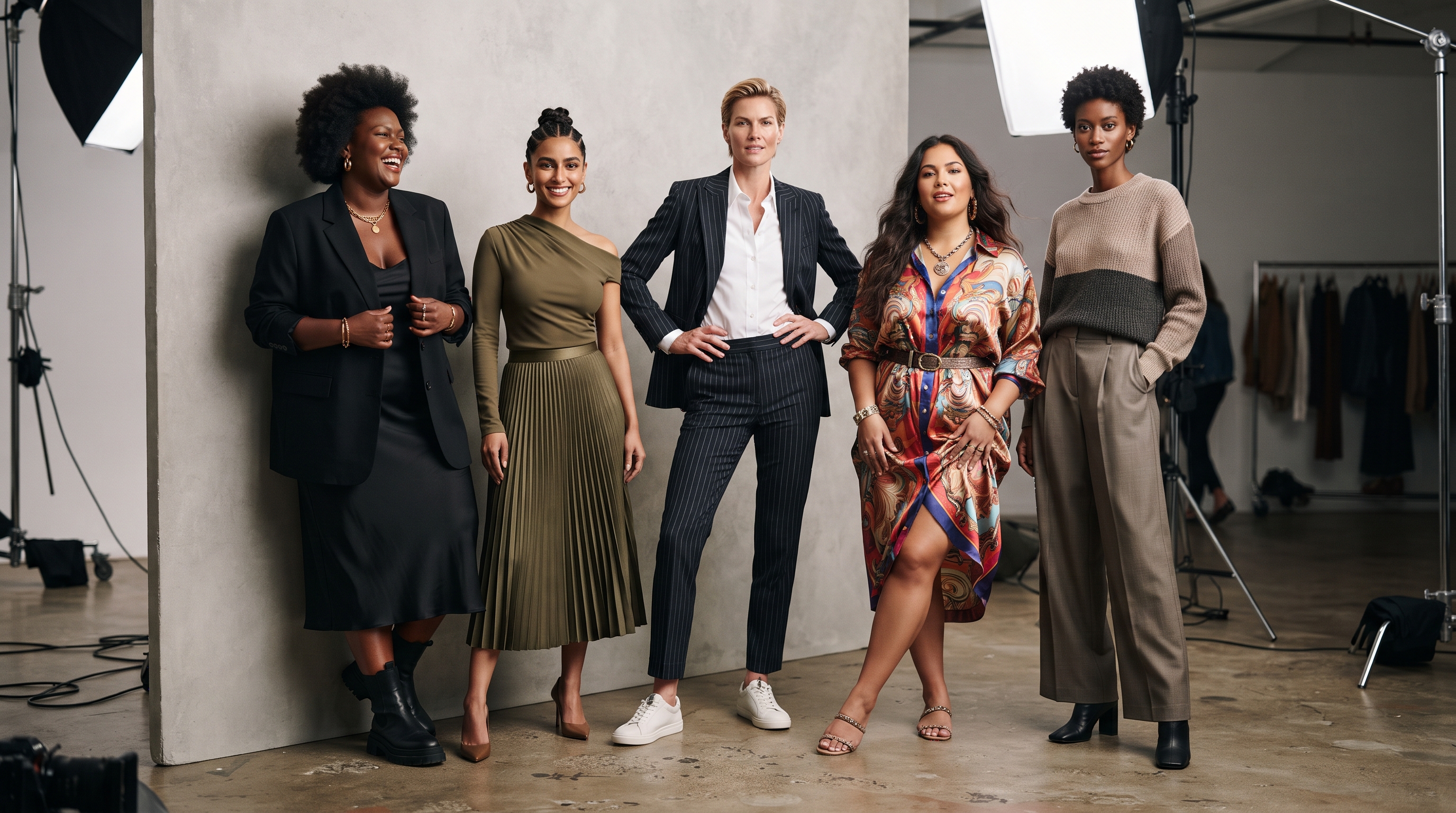
A brand posts a campaign with “diverse models” — different skin tones, different bodies, everyone gorgeous and represented. Except none of these people exist. And, more seriously: not a single real person from those communities was hired, photographed or paid to be there.
That's the core of the most uncomfortable debate around AI in fashion today. The technology promises instant diversity — any body type, ethnicity, age, with one click. But it also raises a question the industry can't pretend doesn't exist anymore: is this real inclusion, or just the appearance of it?
The problem starts in the data
Many AI systems are trained mostly on biased data that favors Eurocentric beauty standards. That means, without deliberate curation, the “diverse” models AI generates tend to reproduce the same narrow patterns as always — just cheaper and faster to produce. Diversity doesn't happen by default; it takes an active choice.
Deliberate curation is what makes the difference
An AI tool for fashion that takes diversity seriously doesn't leave it to chance: it needs to offer real choice of body type, skin tone, age and style — not just the default pattern the model learned on its own. That's the difference between a generic AI, which reproduces bias by default, and an AI built with fashion-specific curation, which treats diversity as a requirement, not an accident.
Amplifying is not the same as replacing
Industry leaders keep insisting on this distinction: AI should be used to amplify diversity — showing models of different backgrounds, bodies and ages in contexts that would never have had the budget for it — not to replace real human talent from groups historically underrepresented in fashion. The difference between the two is easy to state and hard to practice: one expands who gets visibility, the other steals the spot from people who were already fighting to earn it.
Signs a brand is using AI responsibly on this front
- It still hires real models of different body types and ethnicities when budget allows.
- It publicly discloses when an image is AI-generated.
- It uses AI to show more diversity than it already showed — not as an excuse to feature fewer real people.
- It doesn't treat a "diverse AI model" as a cheap substitute for hiring real underrepresented talent.
- It treats AI as a production tool, not a hiring strategy.
The question isn't whether AI can generate a diverse model — it can, with one click. The question is whether that replaces or expands who actually gets space in fashion. Only one of those is real inclusion.
Transparency isn't optional
This is where EstúdioLooks takes a clear stance: brands should clearly disclose when a model is digital. That's not bureaucracy, it's respect — for consumers, who have the right to know what they're looking at, and for the industry's real professionals, whose work shouldn't be mistaken for undisclosed AI output.
Why this matters to consumers, not just to fashion's internal debate
Consumers are paying closer attention to this kind of detail. A brand caught selling “diversity” only in the image, with no real change in who it hires or who's actually behind the storefront, risks being seen as opportunistic — what's now called “diversity-washing”. The opposite is also true: a brand that's transparent about AI use and keeps a real commitment to diverse hiring tends to earn more trust, not less.
Where EstúdioLooks stands in this debate
Our focus isn't replacing a professional model roster on a big brand's campaign. It's giving small brands — the ones that never had budget for a shoot with a genuinely diverse cast — the ability to show products on different bodies, skin tones and body types, without pretending that replaces hiring real people once the brand grows. Used with honesty and transparency, AI expands who gets seen. Used as a cheap shortcut to avoid hiring real people, it becomes exactly the problem we're criticizing.