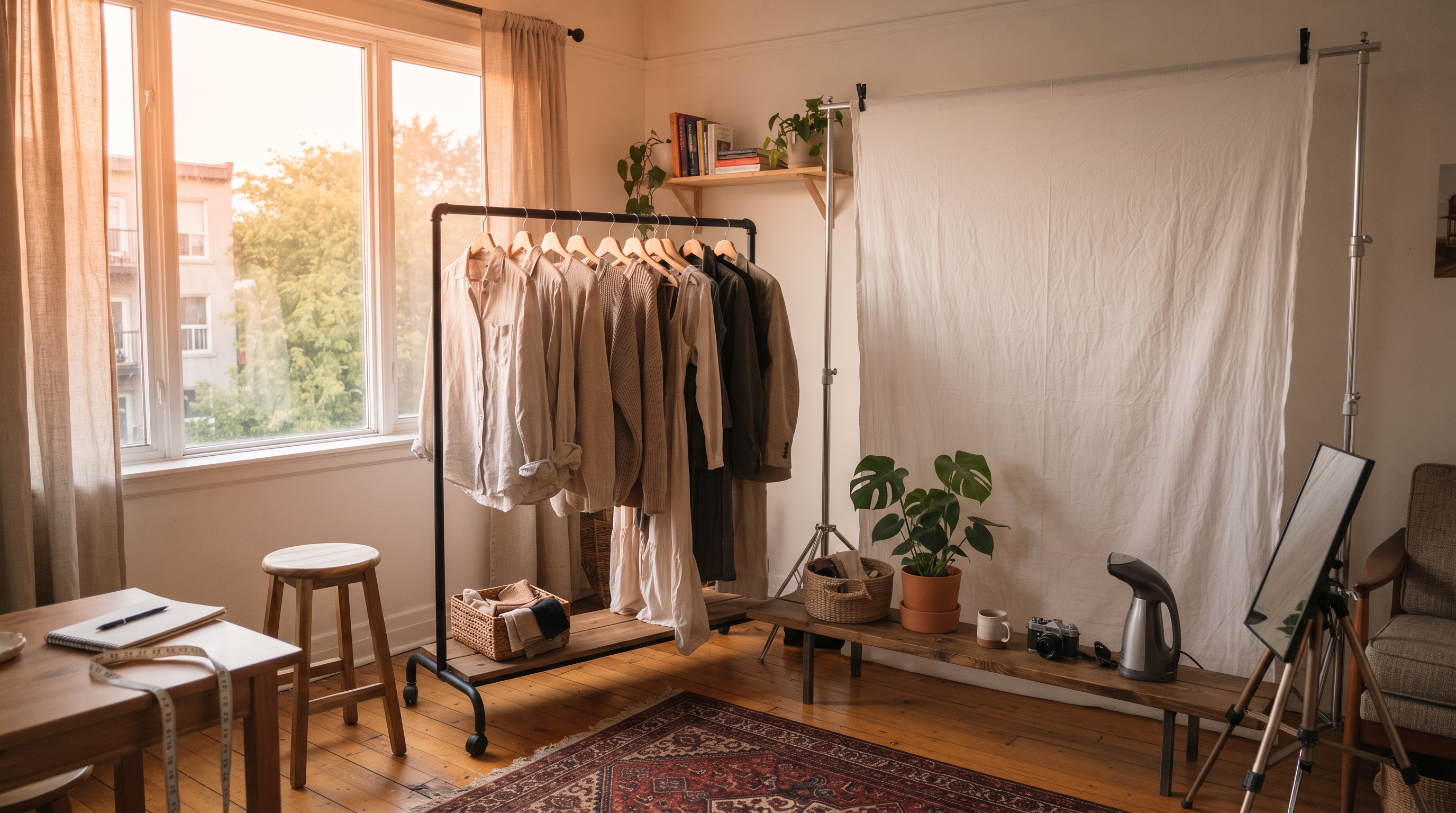
It's 11pm and you're lying on the bed, the new dress spread out next to you, angling the phone to hide the comforter. Tomorrow's post has to go out, a customer already asked in your DMs if the new piece arrived, and the only photo you've got is this one — blurry, with a weird shadow from the lamp.
You've probably priced out a studio to fix this for good. And you probably backed off when you saw the number: traditional photo shoots run $80 to $240 per image, once you add up photographer, model, space rental and editing. For a 15-piece collection, that can top $3,000 — out of reach for most small brands.
The math that stalls every small brand
The problem isn't a lack of desire for good photos. It's that the traditional production model was built for big labels with quarterly campaign budgets. A small brand doesn't launch 4 collections a year with campaign money — it launches every week, with whatever it has on hand.
The result: most brands get stuck between two bad options — pay a lot for a shoot you can't repeat weekly, or post phone photos that don't sell the piece properly. Neither one actually solves the problem.
What changes with AI built for fashion
AI tools made for fashion solve the middle step: you photograph the product — just the product, no model, no studio, no professional lighting needed — and the AI generates the final image, complete with model, scenery and catalog-ready composition. A piece can go from a simple flat lay to a professional model photo in under 15 seconds.
The impact shows up directly in the numbers: sellers who adopt AI photography report on average 340% faster launch speed and a 45% reduction in visual content production costs within the first year of use.
How it works in practice
The process is simpler than it sounds: you photograph the piece on your own, without worrying about a perfect background or studio lighting. The AI recognizes the product and generates the final version — with model, scenery and catalog framing — from that single image. There's no step in between where you have to book anyone.
This kind of technology has already stopped being exclusive to big brands: today, 67% of the world's top 500 fashion brands use AI-generated imagery for at least part of their catalog. The difference is that, for a small brand, the same capability now costs a fraction of what it did until recently — and requires no extra setup to work.
- You postpone launching a piece waiting for a photographer's open slot.
- You shoot on the bed or on the floor at home because there's nowhere else.
- Your last photo shoot cost more than the profit of the entire collection.
- You have good pieces sitting in stock because the photo doesn't do them justice.
- You calculate whether launching is worth it before knowing if you can shoot it properly.
A photo studio was never really about having a room with an infinity backdrop. It's about having an image that sells. Today you can have the second thing without the first.
How much you can actually save
In practice, an investment of $80 to $160 a month in AI tools already lets a small store automate customer service, create professional visual content at scale, and compete on equal footing with big chains — no photographer to hire, no space to rent, no one else's calendar to wait on. It's a fraction of the cost of a single traditional shoot, available every day of the month instead.
The next step is simple
You don't need a studio. You need a phone camera, a product, and a tool that actually understands fashion — fabric, fit, styling — not just generating a pretty picture.
There's a side effect few people talk about: once the catalog finally looks professional, the confidence to post changes too. You stop hesitating before publishing and start launching at the pace the brand needs — not the pace a studio budget allowed.