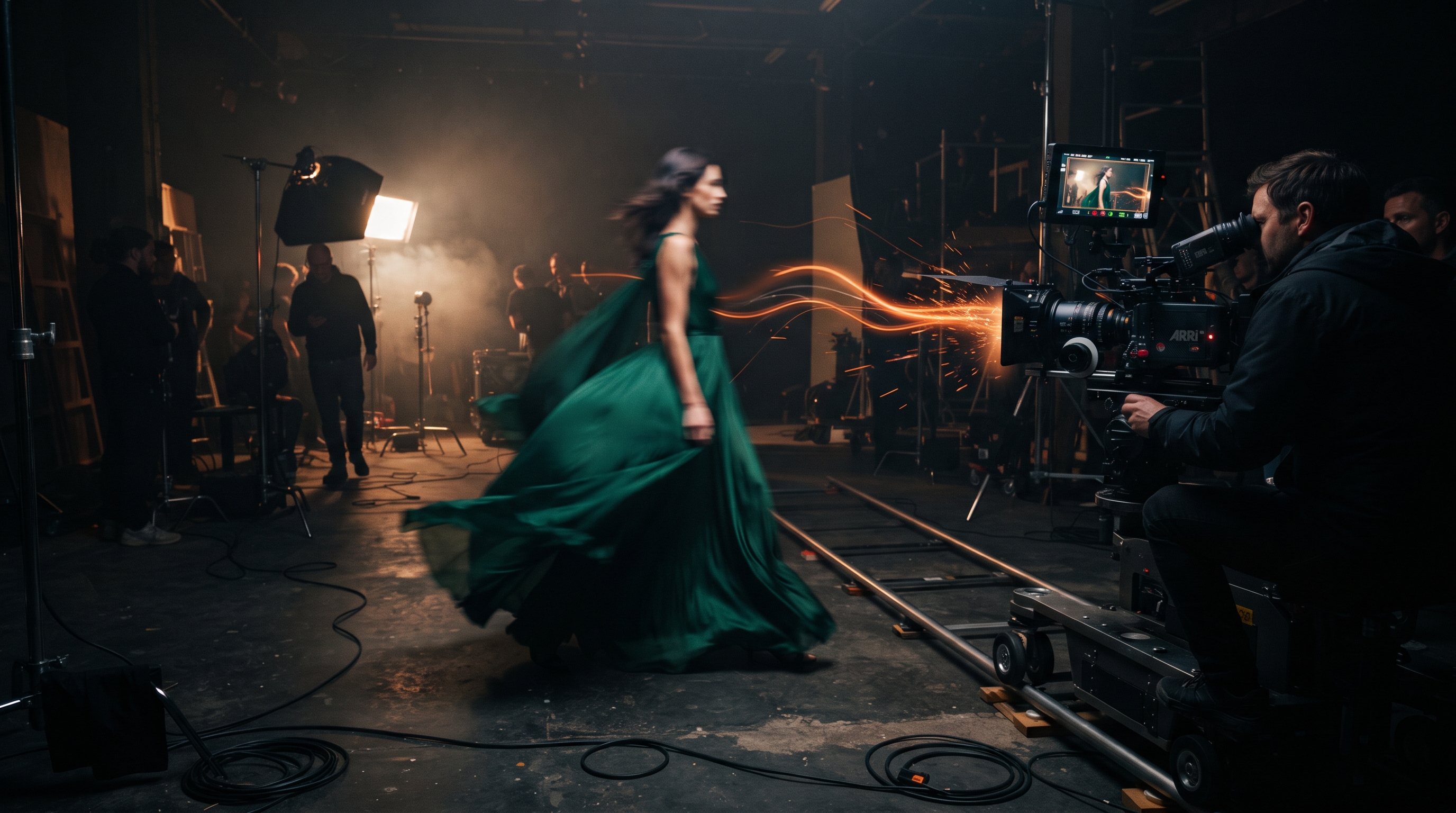
You've done this math before. You asked a production house for a quote on a new campaign video, they sent back a spreadsheet with crew day rates, camera rental, a model, editing — and the number scared you so badly you went back to static photos. Again. Meanwhile, your feed is competing with brands that already post video every day.
This isn't just a feeling of falling behind, it's market data. 73% of fashion executives already consider generative AI a business priority — not an experiment, a priority. And the reason is straightforward: a 30-second fashion ad costs up to 75% less made with AI video than with traditional production.
Why video became mandatory, not a nice-to-have
Reels, TikTok, Stories — the algorithm on practically every social network now pushes video harder than a still photo. A brand that only publishes static images is competing with one hand tied behind its back against anyone posting video as often as they post photos.
The clearest sign the market has flipped: RunwayML, one of the biggest AI video platforms in the world, reported a 300% increase in sign-ups from fashion brands in the last quarter alone. This isn't a niche curiosity — it's a mass migration.
What holds small and mid-size brands back from making video today
- Production house budgets start at a number that doesn't fit a single collection's monthly budget.
- A shoot day competes with a photographer's, model's and location's schedule all at once.
- Editing video takes someone with time and skill the team doesn't have to spare.
- Every new piece would mean a new production budget — impossible to scale.
- The fear of spending big and getting an amateur-looking video, worse than posting nothing at all.
It was never a lack of will to make video. It was a math problem that never worked out. Now it does.
What AI-generated video already solves in practice
Today you can take the same product photo you already use on social media and turn it into a fashion video: a model in motion, a 360° turn, fabric close-ups, a scene change — no crew to hire, no camera to rent, no schedule to wait on but your own.
The result isn't a generic AI video. It's a fashion film built for fashion specifically: it understands fit, fabric and how clothing moves, which is exactly what separates a pretty video from a video that sells.
What to put in your first fashion film
- A 360° turn showing fit and fabric movement.
- A close-up on the detail that sets the piece apart — embroidery, texture, finish.
- The same piece in at least two different scenes, to test which converts better.
- A short 5-10 second cut built for Reels and Stories, not just the feed.
- A caption with price and link — a pretty video with no call to action is just entertainment.
It doesn't need to be cinematic. It needs to be specific enough for the customer to understand what she's buying, and hold attention long enough for the algorithm to decide to push the video to more people.
You don't need to learn video editing
The right tool already delivers the finished video in each network's format — vertical for Stories and Reels, square for the feed. You don't open an editor, cut a scene, or sync audio. You upload the photo, pick the style, and download the file ready to post.
That changes the time math as much as the money math. A campaign that would take days between filming and editing is ready in minutes — meaning you launch the new piece the same day it arrives, not two weeks later.
Fashion films aren't a big-brand luxury anymore
For years, campaign video was a symbol of brands with budget to spare. That's changed. The difference between your brand and a giant one stopped being the budget — it's just the tool each is using now.
Whoever gets ahead in this shift won't just compete on a better price. They'll compete with a feed that already looks like a big brand's, while the competition is still waiting to hear back on a production house quote.