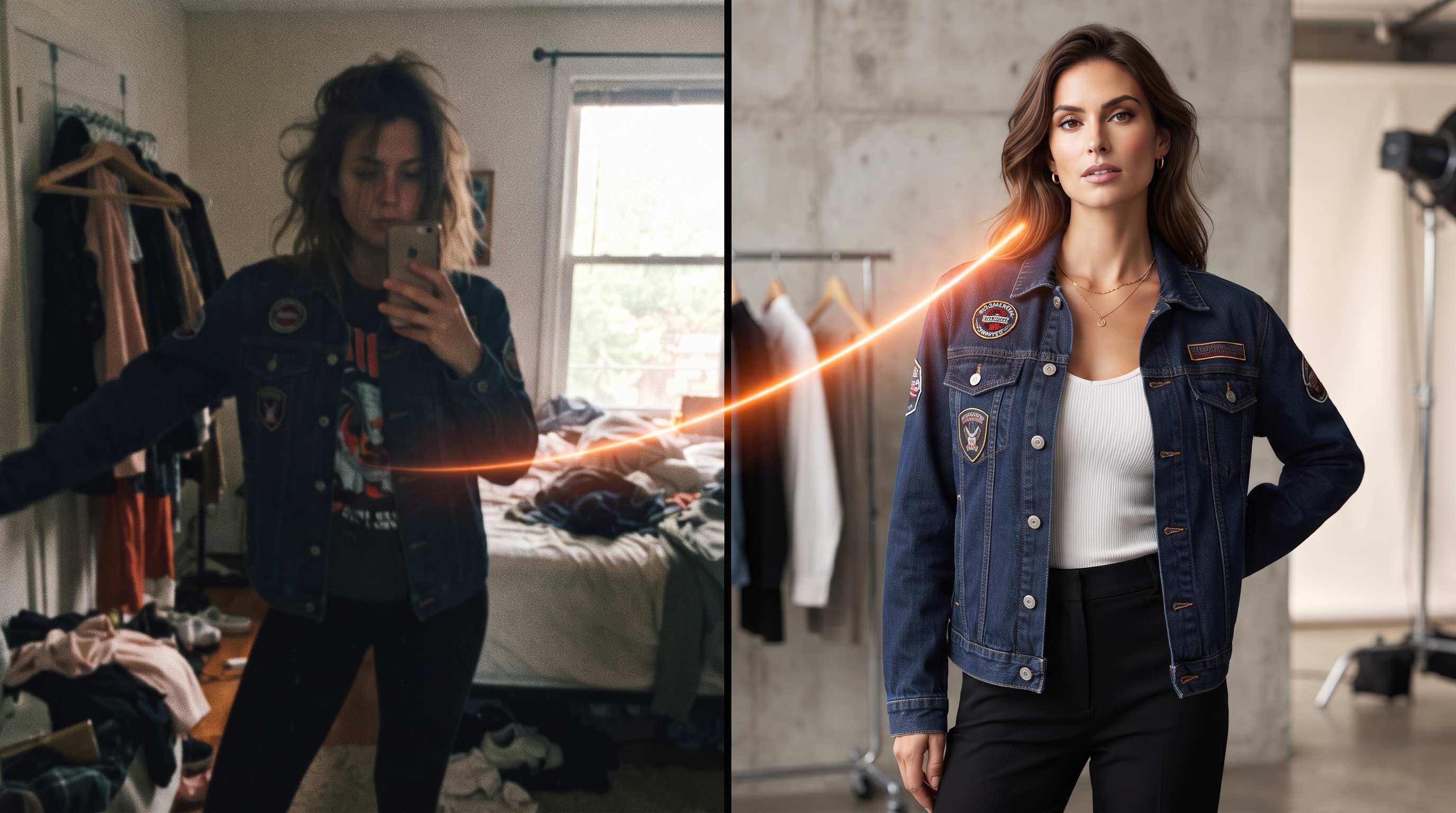
The photo you took is a phone photo. That's not the problem. The problem is that it looks like a phone photo — yellow lighting, messy background, crooked angle — so a piece that's actually good looks amateur before the customer even notices the fabric.
It makes sense: you're not a photographer, you don't have a studio, and you probably shoot between orders, with no time to set a scene. But the customer on the other side of the screen doesn't know that — they just see the photo, and decide in seconds whether they trust the piece.
The problem was never the piece — it was always the presentation
Coverage has already shown small entrepreneurs using AI tools (Gemini, in one case) to take a photo of a garment laid out on a bed and turn it into an image with a model — no studio budget, no one hired. The piece was the same. The entire difference was in the image.
That changes the comparison bar. You're no longer competing with "the photo I can take myself." You're competing with any brand — big or small — that has already discovered the technical barrier to professional photography has fallen.
How the transformation actually works
AI tools built for fashion take a simple product photo — the classic flat lay, or even the piece laid out on a bed — and generate an image with a model, scenery and catalog-ready composition. The whole process today happens in under 15 seconds per image.
It's not manual retouching or a filter. It's a full reconstruction of the scene: the AI understands the fabric, the fit, the body proportions and the lighting — and delivers something that looks like it came from a real production, because it works from the same principles a photographer would use.
You're not alone in this shift
This isn't an isolated trend. Today, 67% of the world's top 500 fashion brands already use AI-generated imagery for at least part of their catalog — and sellers who made the same switch report on average 340% faster launch speed and a 45% reduction in visual content production costs in the first year.
The difference is that, for a small brand, this technology arrived first as an affordable resource rather than as a designer-brand trend. Anyone starting now isn't testing something experimental — they're adopting something already proven at scale, just at their own size.
- Stay true to the fabric, color and real fit of the piece — without "inventing" the garment.
- Generate a model and scenery that fit the brand's style.
- Work from a simple photo, with no studio or professional lighting required.
- Deliver results in seconds, not days of manual editing.
- Keep visual consistency across pieces in the same catalog.
The difference between an amateur photo and a professional one was never talent. It was the tool. And now the right tool fits in your phone.
What this changes for anyone selling online
With the technical barrier removed, all that's left is what actually matters: having the right product and publishing fast. While a traditional photo shoot costs $80 to $240 per image, AI transformation happens at a fraction of that cost per photo — with no one's schedule to wait on.
Your next photo can already look different
You don't need to learn photography or buy new equipment. You need a tool that understands that the photo on the bed already has everything that matters — the right piece — and it's only missing the right presentation.
The gain isn't just visual. It's the feeling of finally publishing without that nagging "is this photo embarrassing" doubt. That changes how often you post — and posting frequency, in the end, is what sells the most.